The Louvre's Glass Legacy

Declan Kennedy
| 09-06-2026
 · Photography Team
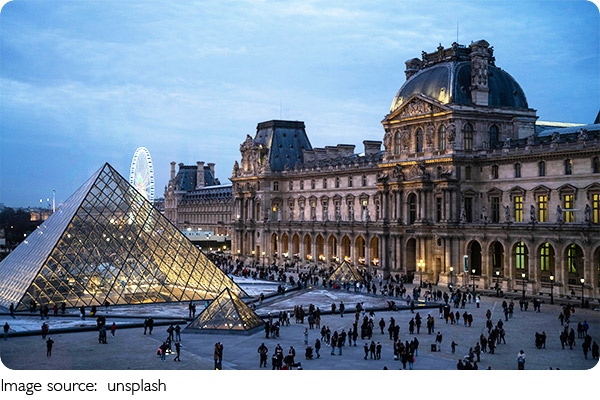
Walk into the Cour Napoléon on a clear morning, and the glass pyramid immediately captures attention, even for those who have seen it countless times in photographs.
The historic limestone facades reflected across its sloped surfaces create a remarkable visual dialogue between past and present.
This harmony between centuries is one of the Louvre's most distinctive architectural achievements. Today, the museum stands as both a guardian of cultural heritage and a symbol of how historic architecture can successfully coexist with modern design.
Louvre Museum, Paris France
From Fortress to Palace to Museum
The Louvre's history began around 1190 as a fortified structure built on the western edge of Paris. Although little of the original fortress remains visible today, the site gradually evolved over centuries into a royal residence through a series of architectural expansions and renovations.
During the Renaissance period, significant developments transformed the complex into a grand palace. Following the French Revolution, the Louvre entered a new chapter and was opened as a public museum, making its collections accessible to a wider audience.
Three major wings surround the central Cour Napoléon: Richelieu, Denon, and Sully. Together, they showcase architectural styles that span approximately five centuries of French design, reflecting changing artistic and cultural influences across generations.
A Modern Architectural Addition
In 1981, a major modernization project was launched to unify the museum complex and improve visitor access. As part of this initiative, a glass and steel pyramid was designed for the center of the Cour Napoléon.
Serving as the museum's main entrance, the pyramid provides access to a large underground reception area that connects the Louvre's three principal wings. Its geometric design incorporates repeating triangular forms that complement the surrounding courtyard while maintaining clear views of the historic palace facades.
The transparent structure creates a balance between contemporary engineering and historic architecture, allowing both elements to coexist in a visually harmonious way.
Now an Icon of Paris
The pyramid and its underground lobby opened in 1989. Since then, the structure has become one of the most recognizable features of the Louvre and a celebrated example of modern architectural design integrated within a historic setting.
Several pyramid-shaped structures are found throughout the Louvre complex, including the main pyramid, smaller pyramids within the courtyard, and an inverted pyramid located beneath the Carrousel du Louvre.
The inverted pyramid, constructed from glass panels arranged in geometric patterns, hangs above an underground concourse and demonstrates the precision and creativity involved in the site's architectural planning.
Accommodation Near the Louvre
Visitors planning to explore the Louvre will find a wide variety of accommodation options in central Paris. Budget hotels typically range from $90 to $170 per night, offering convenient access to major attractions and public transportation. Mid-range properties generally cost between $170 and $340 per night, while luxury hotels often begin at $340 per night and may offer premium amenities, historic settings, and views of the city's iconic landmarks. Staying near the museum allows travelers to experience the atmosphere of one of Paris's most historic districts while remaining within easy reach of cultural attractions.
Dining Around the Louvre
The neighborhoods surrounding the Louvre offer a diverse selection of dining options suitable for different budgets and preferences. A light breakfast or café-style meal generally costs between $10 and $20, while casual restaurant dining typically ranges from $20 to $45 per person. Visitors seeking a more refined culinary experience can expect prices to begin at approximately $70 per person. The area's dining scene complements a museum visit by providing opportunities to relax and enjoy the local atmosphere between sightseeing activities.
Transportation and Accessibility
The Louvre is well connected to Paris's public transportation network, making it easily accessible from most parts of the city. A single public transit ticket costs approximately $3, while day passes generally range from $14 to $23, depending on travel zones and duration. Visitors preferring private transportation can expect taxi fares within central Paris to range from $12 to $30, depending on distance and traffic conditions. Its central location also allows many travelers to reach the museum on foot from nearby attractions and accommodations.
Activities and Visitor Experiences
A visit to the Louvre offers far more than the opportunity to view renowned works of art. Standard museum admission is approximately $25 per person, although prices may vary depending on exhibitions and visitor eligibility. Guided tours, typically ranging from $35 to $90 per person, provide additional historical and architectural insights into the museum and its collections. Visitors may also join walking tours of the surrounding historic district, which generally cost between $18 and $55 per person. These experiences help create a deeper understanding of the museum's role within the cultural and historical landscape of Paris.
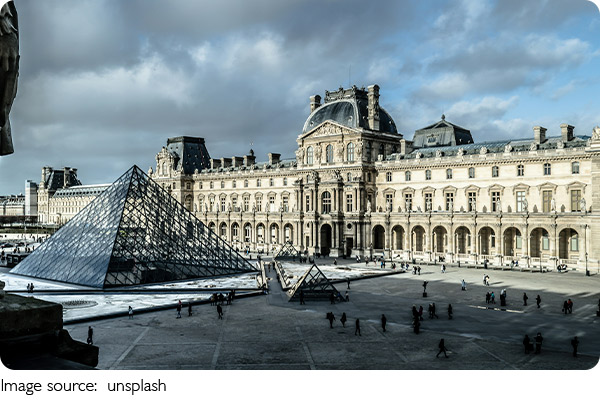
The Louvre's transformation from a medieval fortress into one of the world's most renowned museums reflects centuries of architectural evolution and cultural preservation. The glass pyramid stands as a symbol of this ongoing journey, illustrating how modern design can complement historic heritage while enhancing the visitor experience. Today, it remains one of the most recognizable architectural landmarks in France and an enduring example of innovation within a historic setting.